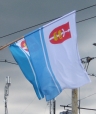
Ta relacja pasuje do fragmentu poniższego opisu. To artykuł o zakładach Yadanabon (bo to był cały kompleks, nie tylko stocznia), zamieszczony w "Union of Burma Literary & Social Science Journal", nr 1/1988 - po birmańsku, ale z pomocą tłumaczy AI udało mi się przetłumaczyć fragment dotyczący konkretnie stoczni:
On the eastern bank of the Irrawaddy River, outside the great city wall on the western side of the royal capital of Yadanabon, above the Pan-set gate, a large royal factory was established to build and repair royal ships. The location of the shipyard was highly suitable and excellent. The factories were situated on the high grounds of the riverbank, so there was no fear of being submerged by floods even when the water level of the Irrawaddy River reached its highest point. Furthermore, during such times of high water levels, ships could be brought directly into the vicinity of the factory. It cannot be stated with exact certainty in which year this shipyard and its factories were constructed. However, since it is found that ships had already been built and completed at this shipyard by the year 1870, it is estimated to have been built between 1864 and 1870.
It is estimated that the installation of some modern machinery was completed within that year. Furthermore, in the year 1234 (1872), the shipyard was expanded and upgraded with the installation of large modern machinery. The Friday issue of the Myanmar Newspaper dated the 15th day of the waning moon of the First Waso, 1234 (July 5, 1872), stated: "The great dock machinery used for hauling up and repairing ships is immense. The dock has been excavated, and some machinery has already been installed. This great machinery is expected to be as grand and excellent as the machinery found in Western countries." This shipyard and factory were fully equipped with modern, high-quality machinery and tools. Most of the machinery was manufactured in Scotland, specifically produced by companies in Glasgow and Greenock. Among them were 4 boilers, 5 engines, 1 large dock machine, and a centrally operated water pump. Mechanical cranes with a capacity of 10 tons and large automatic hammers remained in their original unpacked state, without being installed, until the British annexation. There were 127 factory workers, who collectively received a monthly salary of 2,575 baskets of paddy.
In the Yadanabon shipyard, the construction of modern steam riverboats began around the year 1870, or perhaps slightly earlier. Initially, the Myanmar royal government communicated with foreign companies and major merchants to arrange the purchase of ships. During the year 1226 (1864–65), a ship was purchased from the Henry Denny Company for a cash payment of 210,000 kyats. Contracts to purchase ships were also signed with other companies and merchants. Following that, arrangements were made to purchase 2 iron-hulled steam riverboats equipped with modern cabins, complete tools, and powerful machinery. These vessels measured 120 cubits in length, 20 cubits in beam, 6 cubits in depth, with a draft of 2 cubits. Regarding this matter, on the 7th day of the waning moon of Tagu, 1230 (April 2, 1869), the Mindon King sent a written inquiry to the British representative, Colonel Sladen. However, just like the project to purchase cannons and firearms, this effort was blocked and disrupted by the British government, ending in failure. Consequently, the Myanmar royal government summoned a skilled shipbuilder named d'Avera from Yangon and, around the year 1870, began the construction of modern steamships directly at the Yadanabon shipyard.
It is understood that a standard river steamship, which was the work of d'Avera, was successfully launched on the 13th day of the waxing moon of Thadingyut, 1232 (October 7, 1870). The hull of that ship was constructed using teak wood. The British government strongly suspected that the Myanmar people would convert and use this vessel as a warship. Consequently, the British representative in the royal capital kept a close watch on the ship and continuously gathered intelligence on it.
The production capacity of the Yadanabon shipyard will be further described. After the first ship was launched in October 1870, d'Avera simultaneously continued the construction of 10 more identical steamships. The keels for all 10 vessels were laid down at the same time on March 5, 1871, marked by a grand ceremony. On that day, all government offices and courts across the royal capital were closed, and townspeople, ministers, queens, princes, and princesses gathered together to attend the auspicious ceremony. Out of the 10 ships supervised and built by d'Avera since March 5, 1871, the first 2 vessels were successfully launched on June 2 of that year, accompanied by royal celebrations, ceremonies, and a 12-gun salute. Orders were given to expedite the work so that the remaining 8 ships could also be launched shortly. Since these vessels were to be built as river steamships, contracts were signed with the Macneill Company, Daw-son-son Company, and Henderson Company to supply the necessary ship engines. It is found that these ships had a length of 170 to 180 feet, a beam of 24 feet, and a depth of 6 feet. Earlier, in March 1871, the construction of another warship measuring 165 feet in length and 28 feet in beam had also commenced at the Yadanabon shipyard. The shipwright building this warship was a Myanmar national named Saya Shwe from Mawlamyine. Amidst a grand ceremony and a cannon salute, this warship was launched on July 2, 1871, by royal decree. The ship was heavily built with strong timber. It was reinforced with 5-inch thick iron plates and featured a special armor plating design. It was armed with 20 arranged to be mounted. At the bow of the ship, a beautifully carved figurehead representing a traditional Myanmar warrior, showcasing excellent craftsmanship in teak, was installed. The British government representative and plenipotentiary noted with praise that the Myanmar national who built this ship was highly commendable. In building the ship, Saya Shwe, along with over 200 workers, labored together. Among them, about 50 workers were carpenters from the city of Mawlamyine.
By the end of the year 1233 (1871), the production capacity of the Yadanabon shipyard was as follows:
Completed: 3 ships of 250 tons each;
Under construction: 1 warship of 250 tons;
and Under construction: 10 ships of 200 tons each.
It is found that the British government representative frequently visited the Yadanabon shipyard to inspect it, and secretly communicated with the shipwright d'Avera to spy on and investigate the status of those ships. The key point that the British government urgently wanted to know was the degree of success and completion of the warship being constructed by Saya Shwe. To ascertain this matter precisely, the British representative went to the shipyard to inspect it once on January 3, 1872, and again on May 31. Furthermore, in July 1871, he secretly wrote to the shipwright d'Avera to inquire about the details of the 10 ships that the shipwright was building. At that time, the shipwright d'Avera replied that the 10 ships he was constructing were standard river vessels; however, if desired, they could be slightly modified into warships capable of being equipped with 2 large cannons and 4 to 8 smaller cannons. Nevertheless, he added that the Myanmar royal government had not issued any such orders for modification. In addition, d'Avera wrote that he was ready to happily provide and report any other information required, and he would discreetly manage it so that it would not leak or be known to the Myanmar royal government.
The ships built at the Yadanabon shipyard continued to be launched between 1872 and 1874. To be exact, it is believed that one ship was launched on the 7th day of the waxing moon of the Second Waso, 1234 (July 12, 1872), and three more ships were launched within a few days after that. In May 1872, the major merchant Macneill imported and supplied machinery for one of these ships. Meanwhile, four ships purchased from England for approximately 1 million [kyats] were modified and fitted with engines directly at the Yadanabon shipyard. These four ships had been purchased through the Hunter Company based in Yangon. The vessels were steam-powered riverboats propelled by paddle wheels. To modify and install engines on these ships at the Yadanabon shipyard, an engineer named MacIntosh was additionally summoned and employed. On the 3rd day of the waning moon of Tawthalin, 1235 (September 9, 1873), an iron steamship was successfully launched. Although the remaining three ships were in a near-complete state, it is estimated that they could only be launched the following year due to the receding river water levels. During Nayon (June 1874), amidst grand royal celebrations, music, and festivities, three ships were launched at the Yadanabon shipyard. This ceremony was described as follows in the Saturday issue of the Myanmar Gazette dated the 14th day of the waning moon of Nayon, 1236 (June 13, 1874):
The Launching of 3 Completed Ships Built in the Royal Capital with Royal Ceremonies
—About two or three weeks ago, on a Monday, three ships constructed in the royal capital reached full completion. When launching them from the shipyard high grounds into the water, the highly virtuous royal sons—the Magway Prince, the Shwegu Prince, along with two other princes—mounted the royal elephants, which were fully adorned with splendid decorations. The princes themselves were also magnificently dressed in valuable royal robes (paso), garments, and insignia befitting their high status. Accompanied by senior royal ministers, officials, and their wives, the ships were launched amidst a grand and festive royal ceremony, filled with traditional music, celebrations, and cheers .The chief engineer, Mr. Macintosh, is also a person who is highly skilled and thoroughly experienced in all matters related to large machinery. Accordingly, all the work he performed was of such exceptional quality that it could be compared to the flawless craftsmanship of the celestial architect Thagyamin (Sakra).
Although it was stated that the 3 ships were "built in the royal capital," it should be understood that they were actually iron steamships purchased from England and then modified, fitted with engines, and upgraded by the engineer MacIntosh at the Yadanabon shipyard. Although the work was completed in 1873, they could only be launched in 1874 due to the receding river water levels. Following that, on the 1st day of the waxing moon of Wagaung, 1236 (August 13, 1874), another ship constructed by d'Avera was successfully launched after being fully fitted with machinery. At that time, it is said that the Myanmar royal government also ordered MacIntosh, who installed the machinery on those ships, to build a warship capable of carrying 16 cannons. Regarding the warship built by Saya Shwe from Mawlamyine, although it was said that it would be fully completed and launched in October 1872, it was found that the vessel had not yet been launched when the team of Captain [Plenipotentiary] visited and inspected the shipyard on May 26, 1873. At that time, it was recorded in the Captain's log that the necessary machinery had not yet arrived from England. It is stated that a contract had been signed to purchase and import the engines for the warships from India. However, no evidence or records have been found to state with exact certainty in which year and on which date this warship was fully completed and launched, or how effectively and successfully it was put into service. In January 1875, the Myanmar royal government conducted a military naval exercise on a river steamship, firing 2 cannons. Furthermore, 14 cannons were successfully mounted on a ship built by d'Avera, which then sailed up to Bhamo in April 1875. No evidence or records have been found yet to indicate the production capacity and labor activities of the Yadanabon shipyard during the later period under the reign of King Thibaw after 1874. However, from what is known, it should be concluded that the Yadanabon shipyard produced a total of 18 ships before 1880. This total includes 3 ships completed before 1870, 10 teak ships built by d'Avera starting from 1871, 1 warship armed with cannons built by Saya Shwe, and 4 iron steamships modified and fitted with engines by MacIntosh.
Zgadzają się daty, do tego nadzorujący montaż inżynier w ww. notce prasowej jest anonimowym Szkotem, a tutaj otrzymuje nazwisko... MacIntosh. Statki zostały zwodowane 9.9.1873 (pierwszy) i prawdopodobnie 1.6.1874 (pozostałe trzy). W notce (rok później!) jest mowa, że zostały zbudowane w W. Brytanii "ok. trzy lata wcześniej", co daje przedział 1870-1872. Teraz tylko rozwiązać zagadkę, u kogo je zbudowano... skoro Szkot, to może i stocznia jakaś szkocka?